

Bearings, Chains, Belts: the Feel-Look-Listen Diagnosis for VFFS Drives
Bearings, Chains, Belts
The Feel-Look-Listen Diagnosis for the Three Drive Components
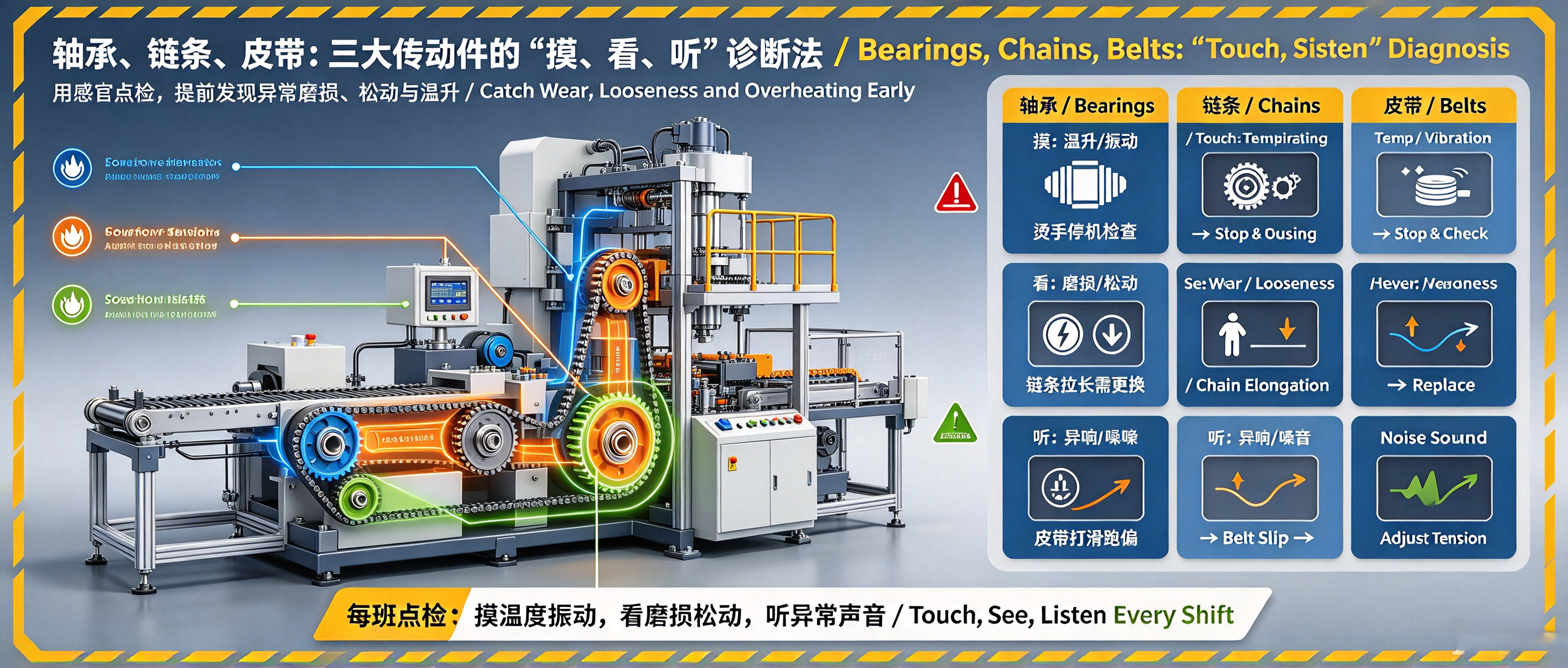

Cover: chains, belts and bearings — the machine’s legs
Heating, sealing and film pulling are all visible, but what really runs the machine are the bearings, chains and belts hidden behind the panels. When they fail, it is usually noise first, then vibration, then a sudden stop.
Ten minutes a month of feeling, looking and listening beats everything. This article turns the manual’s sections 6.2 and 6.3 into a checklist you can follow.
1. Feel, Look, Listen: Three-Skill Diagnosis
Table 1. Feel-look-listen diagnosis (from the manual, sections 6.2 & 6.3)
|
Skill |
Target |
How to judge |
What it means |
|
Feel |
Bearing housings, chains, belts |
After stop, back of hand near housing; abnormal heat = lube/assembly issue; chain too loose when pulled = adjust |
Low oil, over-tight, bad assembly |
|
Look |
Chains, belts, screws |
Chain sag, rust, dry; belt cracks, delamination, edge wear; loose screws/nuts |
Wear, looseness, dry running |
|
Listen |
Machine in operation |
Chain rattles = dry; bearing dry squeal = low oil; belt screech = slipping |
Insufficient lube, wrong tension |
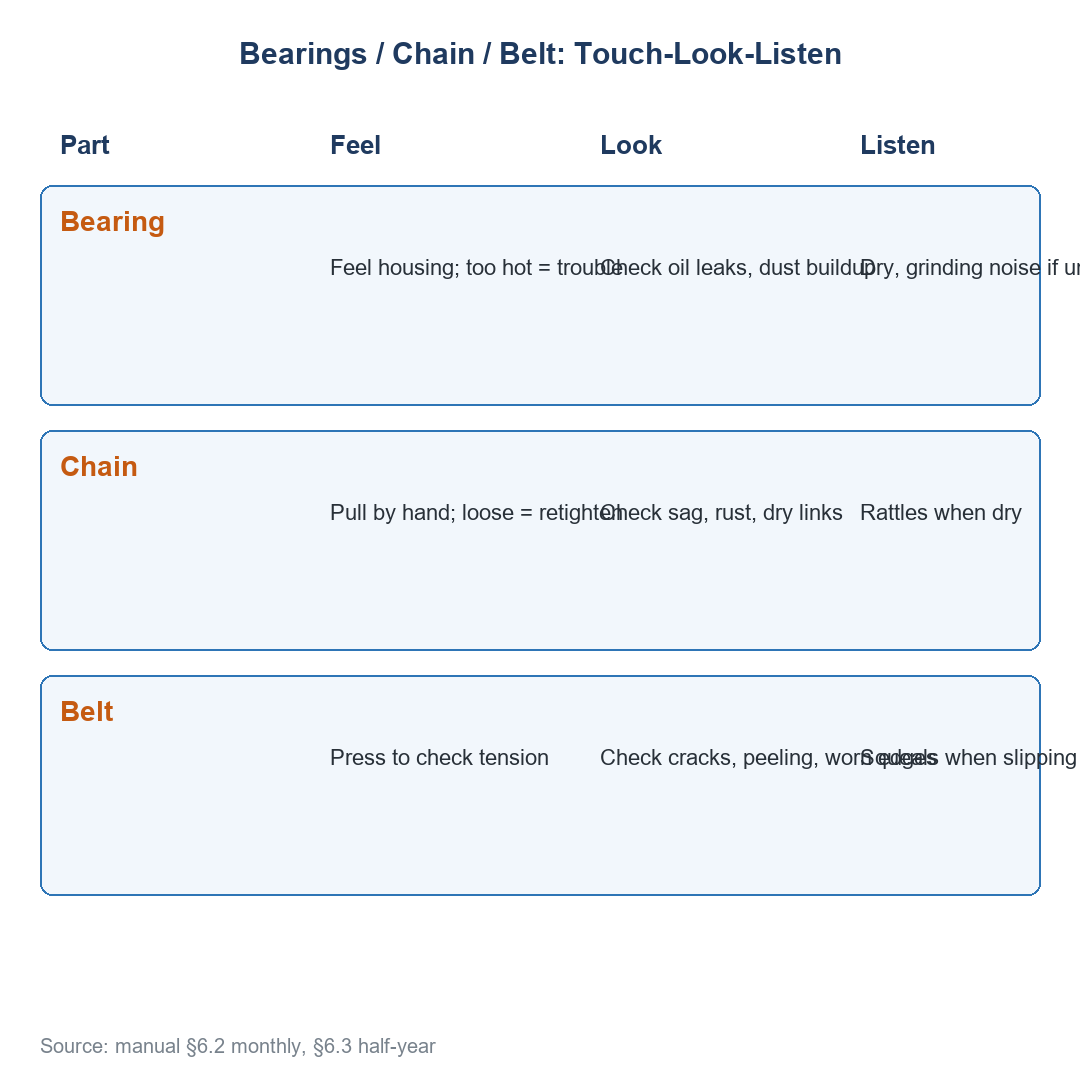

Fig. 1: feel-look-listen diagnosis table
⚠ Feel temperature only after stopping and confirming safety — use the back of your hand, never a greasy glove on hot parts.
2. The 4 Monthly Tasks
“Monthly: lubricate the end-seal bearings; lubricate the drive chains (sprockets); check chain and belt tension and tighten if loose; check screws and nuts and tighten if loose.”
— Vertical packaging machine instruction manual, section 6.2
• Lubricate the end-seal part bearings;
• Lubricate the drive chain (sprockets);
• Check chain and belt tension; tighten if loose;
• Check all screws and nuts; tighten if loose.
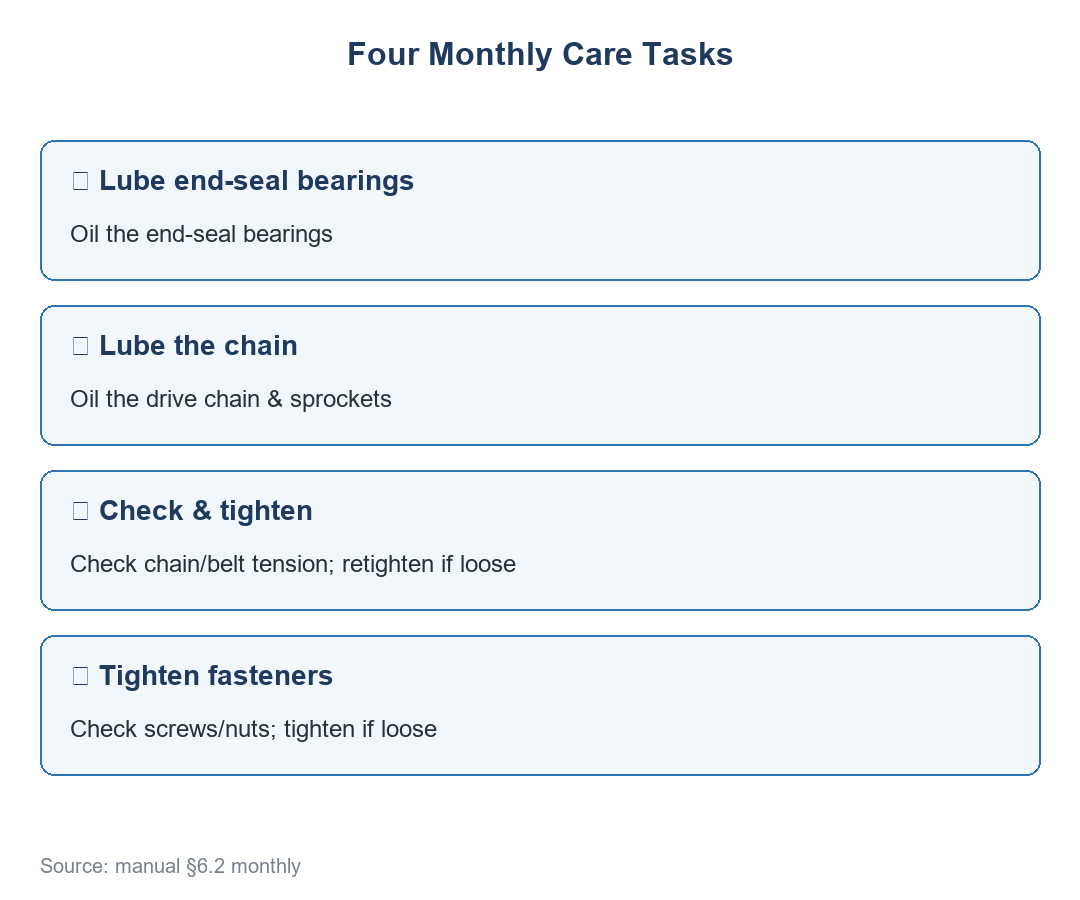

Fig. 2: the 4 monthly tasks (from the manual, section 6.2)
3. Grease: Points and Technique
• Bearings: end-seal bearings are the key lube point — add oil/grease monthly;
• Chains: oil the whole chain and sprockets so every link gets some — not just one spot;
• Tension: if chain/belt is loose, tension it per the machine structure; over-tension damages bearings.
✔ After greasing, run the machine idle for a minute or two to work the oil into the mating surfaces, then listen for noise.
4. Belt Wear: Replace Before It Breaks
“Check the drive belts (V-belt and pull-sync timing belt) for wear; if severely worn, replace them.”
— Vertical packaging machine instruction manual, section 6.3
• V-belt: check for cracks, edge wear, delamination; shiny glazed surface slipping = time to replace;
• Pull-sync timing belt: check tooth wear and skipped teeth; film pulling inaccurate? Check the timing belt first;
• Belt tension: too loose slips and screeches, too tight hurts bearings; press the middle — a little give is right.
⚠ Severely worn belts must be replaced — do not wait for a break on the production line. Match the model number; the wrong belt slips too.
Final Thoughts
When the three drive components neither rattle nor vibrate, the machine runs steady. Ten minutes a month: feel temperature, check tension, listen for noise, do the 4 tasks, and replace belts on time.
Next article: the half-year “heart check” — don’t let PCB dust burn out the whole PLC!
Call to Action & Series Note
Drive parts failing often? Reply with the keyword “maintenance” to get the printable daily checklist; send us your machine model and our engineers will tailor a maintenance plan.


