


-
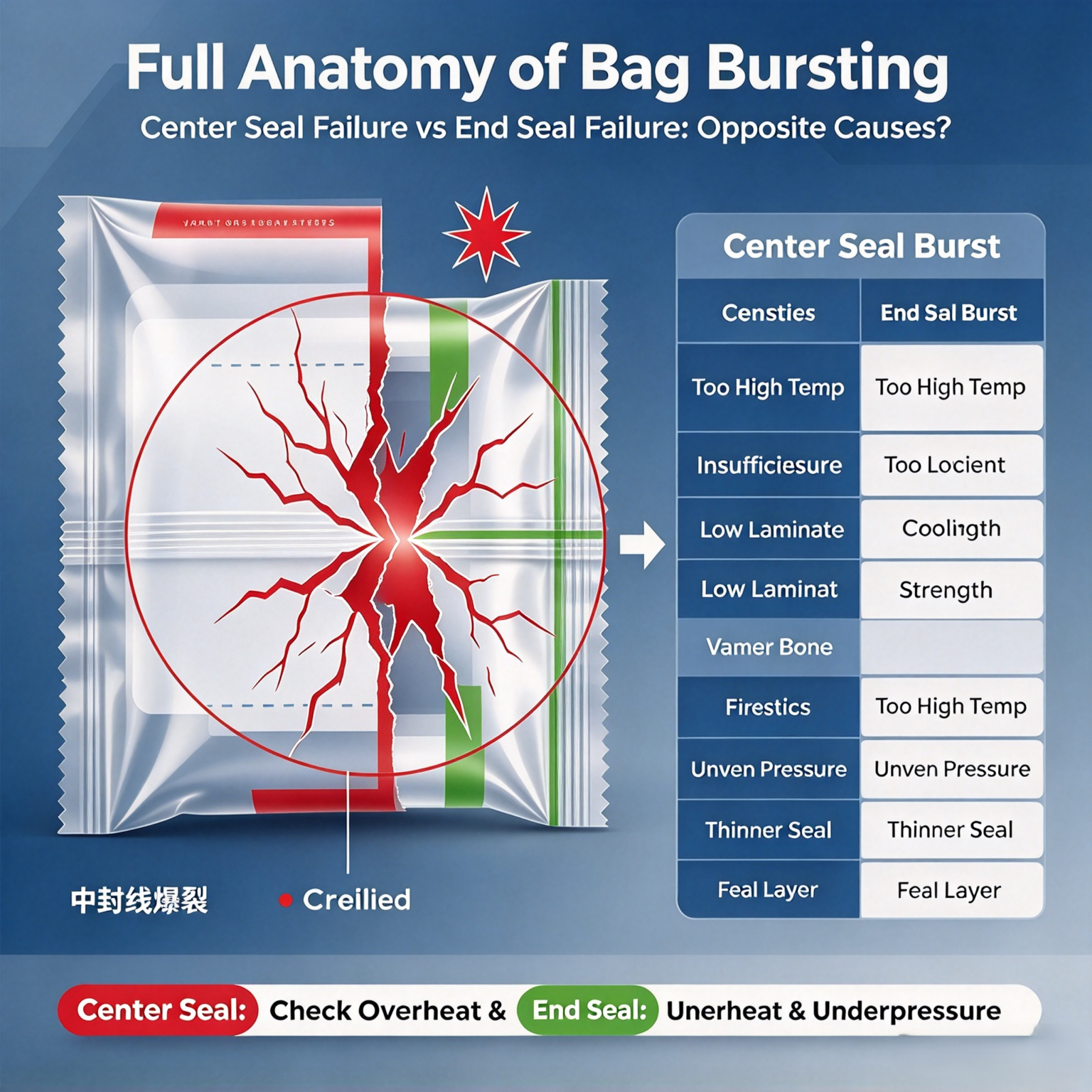
Burst Bags Explained: Middle-seal Bulge and End-seal Tear Have Opposite Causes
Does the bag bulge at the middle seal or tear at the end seal? The causes are nearly opposite - adjust the wrong way and it gets worse. Per the manual: a middle-seal bulge is often too hot, too much silicone oil, or over-inflation, so lower the middle-seal temp and use less oil; an end-seal tear is often too cold or uneven jaws, so raise the end-seal temp and re-level them. Also how the front/rear sponge on top vs bottom sets inflation or venting.
-
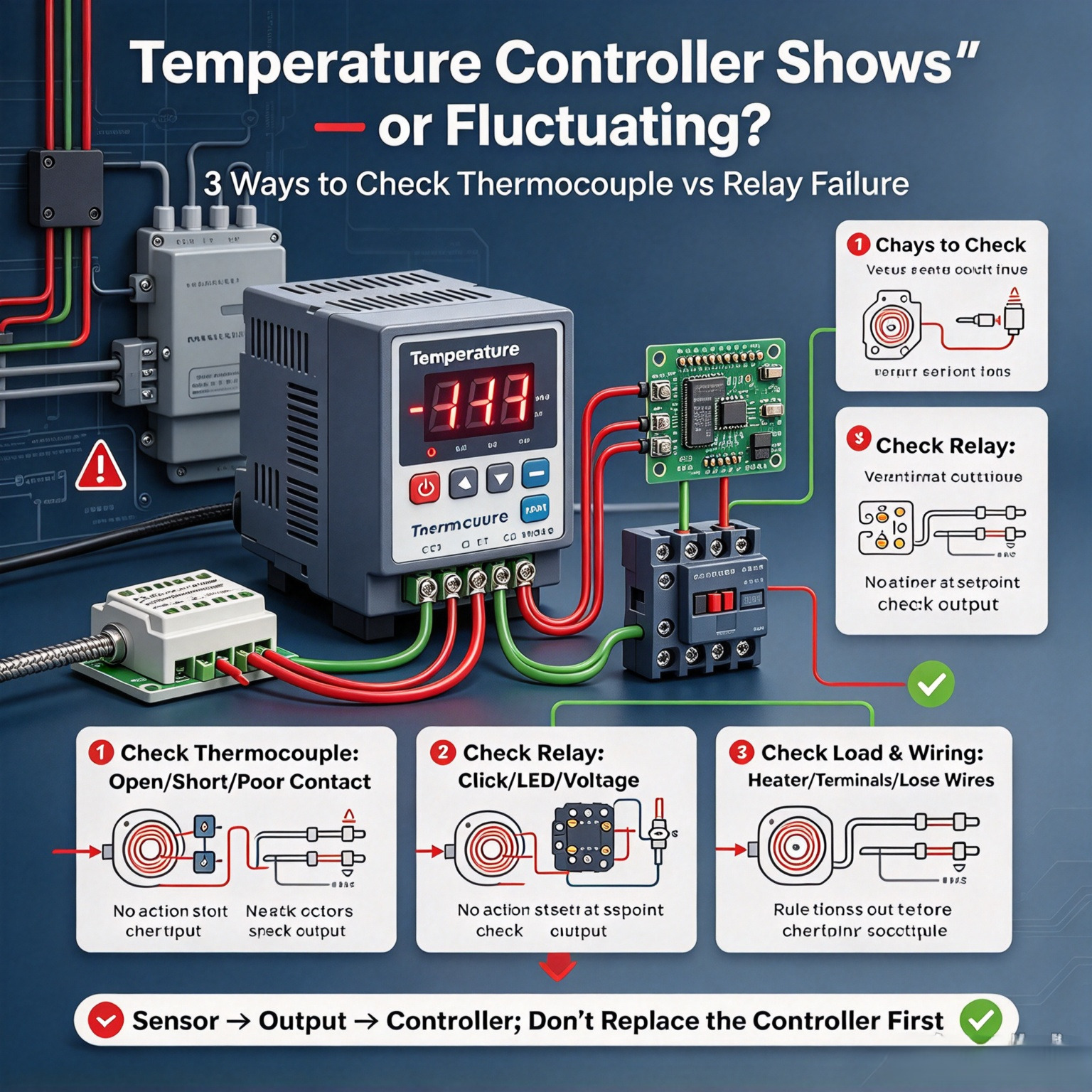
Temp Controller Shows --- or Jumping? 3 Tests to Tell Thermocouple from SSR
Blank display or jumping temps? Do not replace the whole part. Per the manual fault table: a --- readout usually means the thermocouple loop is open (no signal); runaway heating means the SSR is welded shut; power off and measure the heater with a multimeter - infinite ohms means burned, near zero means short. Also check loose terminals and over/volatile voltage. Rule: always cut power and use a qualified electrician.
-
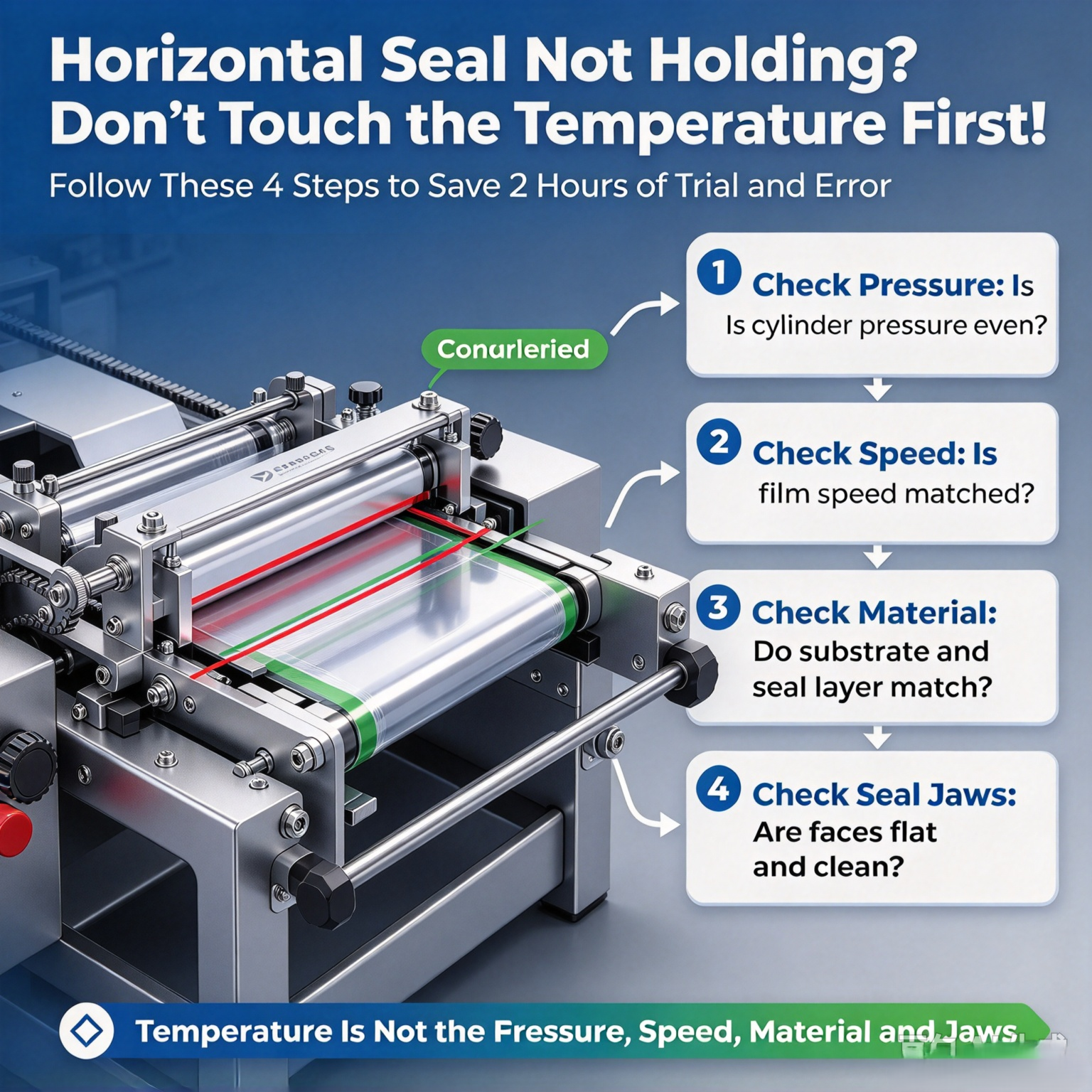
Horizontal (End) Seal Leaks? 4 Steps Before You Touch the Temperature
End seal leaks or tears? Operators usually reach for the temperature first - the longest detour. Per the manual fault table, go four steps: stop, cool, scrub the end-seal jaw with a wire brush dipped in silicone oil (dirty jaw is the #1 cause); check jaw misalignment and re-align; only then set temperature (0-399C, tune until both seals hold without leaking or wrinkling); lastly change poor film. This order fixes most failures on the spot.
-

Half-Year “Heart Check”: Don't Let PCB Dust Burn Your PLC
The PLC and circuit boards are the heart of the machine, yet untouched for half a year. Dust layers and loose terminals lead to overheating, tracking in damp weather, and arcing — the fault table lists a loose terminal as a cause of a blank temp controller. Per the manual: every half year check the terminal block and tighten loose wires, and blow dust and dirt off the components and PCBs with clean, dry compressed air. Always cut the power first; never work live; use a qualified electrician.
-

Bearings, Chains, Belts: the Feel-Look-Listen Diagnosis for VFFS Drives
Heating, sealing and film pulling are visible, but what really runs a vertical packaging machine are the bearings, chains and belts behind the panels. They fail in order: first noise, then vibration, then a sudden stop. This guide gives the feel-look-listen diagnosis (temperature, tension, wear, sounds), the manual's 4 monthly tasks — lubricate end-seal bearings, lubricate drive chains/sprockets, tension chains and belts, tighten loose screws — plus a belt wear checklist.
-
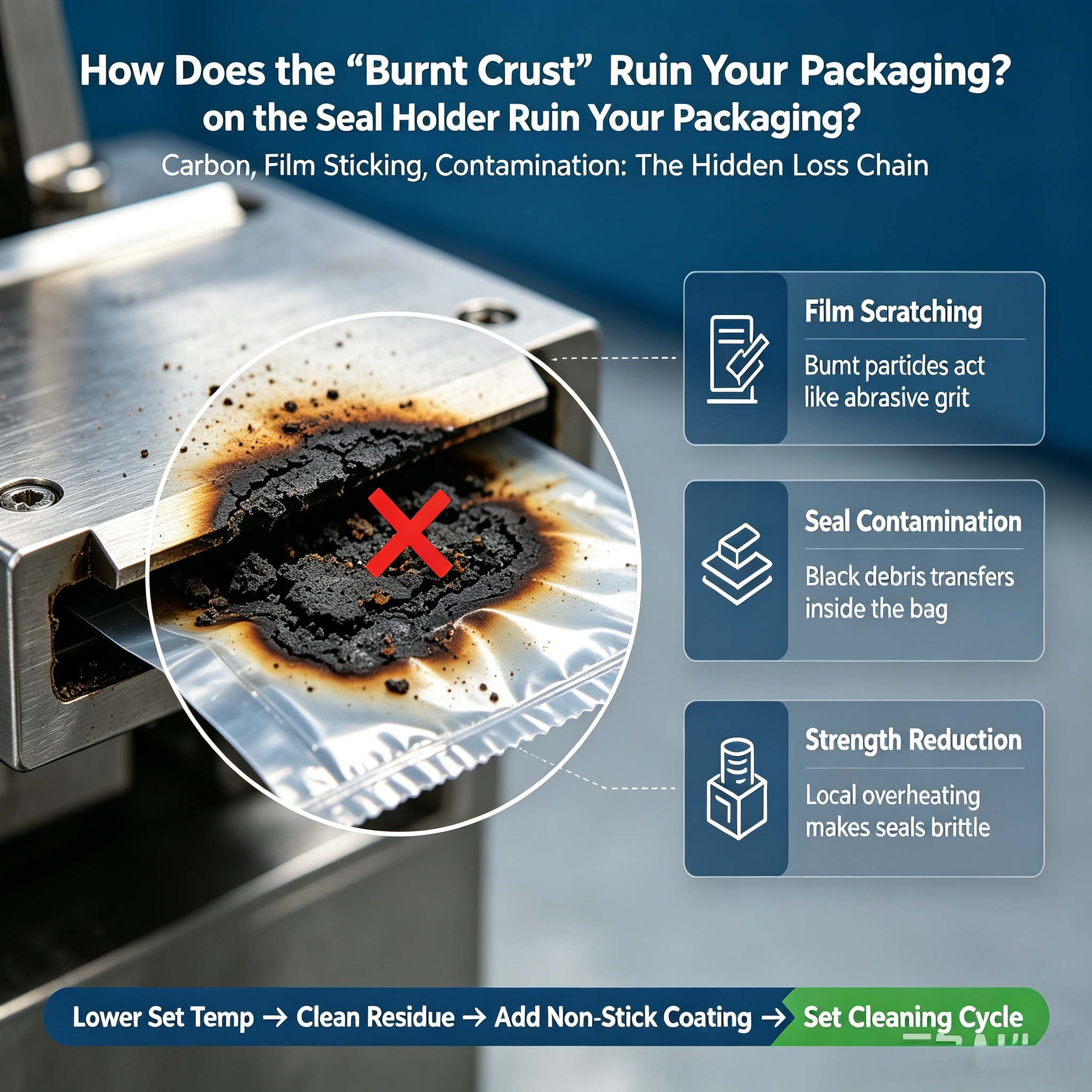
Burnt Residue on the Seal Jaw: How It Ruins Your Bags (Wire-Brush Tips)
A weak horizontal seal makes operators reach for the thermostat first. More often it is a dirty jaw: the hot end-seal jaws stick to the film, and repeated film scraps scorch into a dark hard crust that ruins heat transfer and makes bags leak, burst at the side, or tear at the end. The manual's fix is simple — after cooling, brush the jaw with a wire brush dipped in silicone oil, which both cleans and prevents re-sticking. A before/after comparison and three wire-brush tips are included.
-
Stop ≠ Power Off: The VFFS Daily 30-Minute Maintenance Checklist
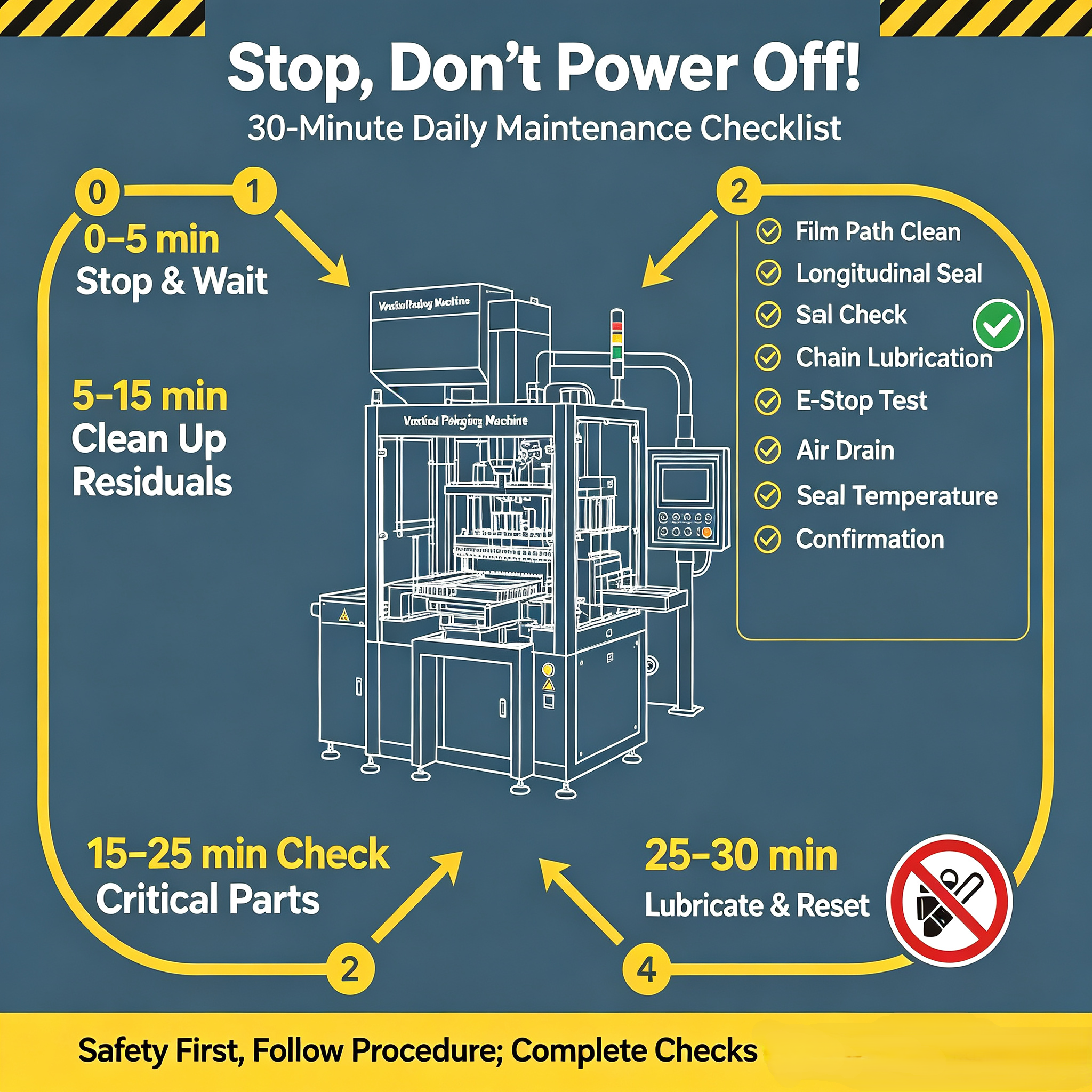
Stopping is not maintenance. Per manual 6.1, clean after every run: first cut power and let heaters cool. Then blow line debris with compressed air, brush film scraps off the side/end seal jaws with a silicone-oil wire brush, wipe panels and guards, and clean the photoeye lens and tension roller. Three don'ts: never spray water/vapor on it, never clean before it cools, never use alcohol on painted surfaces. Daily checklist included.
-
VFFS Thermal Transfer Ribbon Broken? 3 Fixes Before You Throw It Away
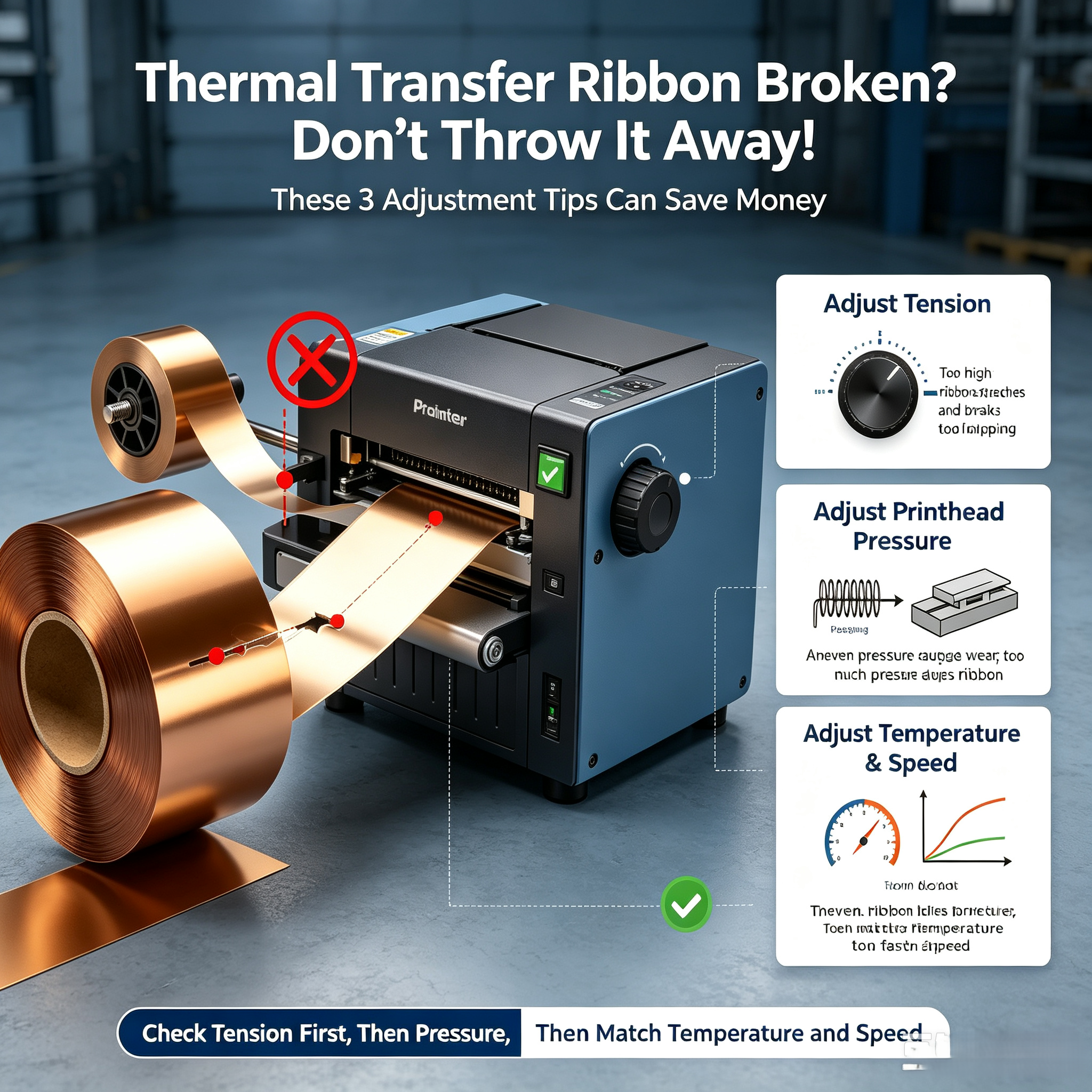
Ribbon broken or mark faint? Before swapping it, check the manual's 3 adjustment points. Print pressure is set by the air-cylinder inlet: too low = faint mark, too high = punched film and a crushed ribbon. The slide-block date position must be locked, or vibration drifts it and tears the ribbon. When changing ribbon, remove parts 4&5, thread per the diagram, then fix the end cap. A pressure-vs-print table is included to extend ribbon life.


